
June 12, 2026 · 6 min read
The Long Line: One of the Most Underrated Tools in Dog Training
By Andrew · Trail & Heel
When people think about dog training tools, they usually think about standard leashes, crates, clickers, harnesses, or aversive tools like prong collars and choke chains.
One of the most useful tools I use with dogs gets left out of that conversation all the time: the long line.
A long line is exactly what it sounds like. It is a longer leash, usually somewhere between 10 and 30 feet, that gives your dog more room to move while still keeping them safely connected to you.
It is simple, cheap, and useful in more situations than people realize.
Teaching early leash manners without so much pressure
A long line is not a replacement for a standard 4- or 6-foot leash. Dogs still need structure. They also need to learn how long the leash is, where the end of it is, and how to move with you without constantly hitting tension.
But when a dog does not have those skills yet, the long line can make training easier.
A short leash can turn every mistake into pressure. The dog pulls, the handler pulls back, the dog gets frustrated, and now the whole walk is about tension.
A long line gives the dog more room to figure things out. They can sniff, slow down, speed up, and check in without hitting the end of the leash every few steps.
That gives you more chances to reward the behavior you actually want: staying connected, moving with you, and choosing not to pull.
Helping nervous dogs feel less trapped
Some dogs feel leash pressure very quickly.
For nervous or anxious dogs, a tight leash can make the world feel more stressful. They may already be unsure about people, dogs, cars, sounds, or new places. When the leash stays tight on top of that, they can feel trapped.
A long line gives them a little more breathing room.
They can move, sniff, look around, and process the environment without being held right next to your leg every second. You still have control. They are still safely attached to you. But the whole setup feels less restrictive.
For sensitive dogs, that can make a big difference.
Safer freedom for play around distractions
This is one of my favorite uses for a long line.
A lot of dogs need play. They need to run, chase, tug, fetch, and burn off some energy before they can think clearly. But in public places, fully off-leash play usually is not safe.
A long line gives you a middle ground.
At a park, for example, you can play fetch and give the dog room to move without giving them complete freedom. If another dog appears, a kid runs by, or the dog gets too excited, you still have a safety line.
That means the dog gets more freedom, and you are not gambling with recall before they are ready.
It is especially helpful for young dogs, high-energy dogs, and dogs who need movement before they can settle into training.
Why it helps Luna with leash biting
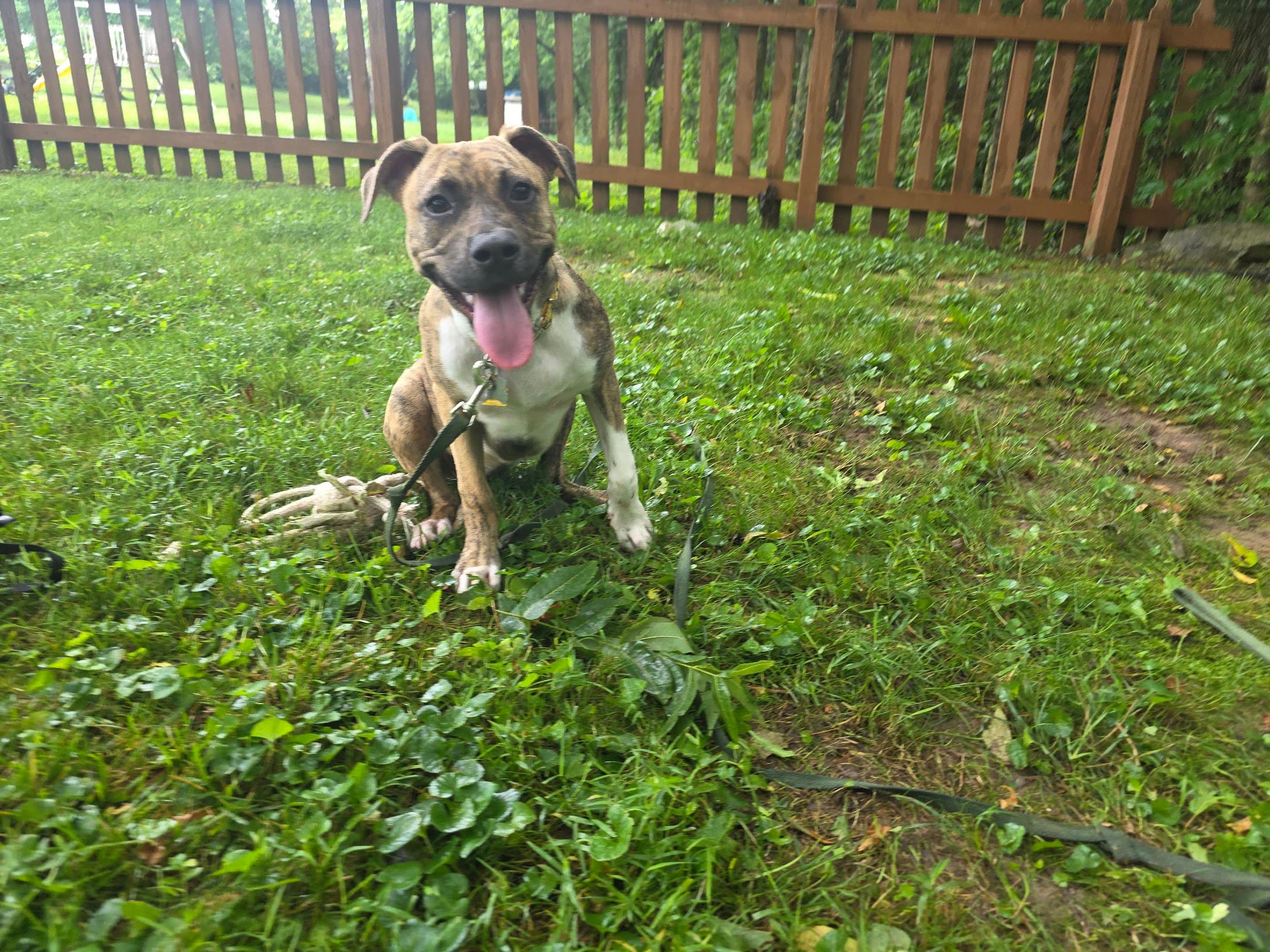
Luna, a new member of the pack, has been a good example of this.
She has a habit of biting the leash. That is common with young or overstimulated dogs. A regular leash often hangs right near the dog’s face, bouncing around like a toy they are not supposed to grab.
For Luna, the long line helps because it usually lays on the ground instead of dangling in front of her mouth.
That small change matters. The leash is not constantly swinging by her face, so she has less reason to obsess over it. She also gets a little more room to move, which lowers some of the frustration that can feed leash biting in the first place.
The long line I recommend
For most owners, I recommend a simple, inexpensive long line. You do not need anything fancy. You want something easy to hold, long enough to give the dog freedom, and cheap enough that you will not be upset when it gets dragged through dirt, grass, and mud.
A long line is not magic. You still need timing, rewards, awareness, and common sense.
But for a lot of dogs, especially dogs who feel pressure quickly or do not have leash skills yet, it is one of the best tools you can use.
Sometimes the best training tool is not the one that gives you the most control.
Sometimes it is the one that gives the dog enough freedom to make better choices.