
June 18, 2026 · 7 min read
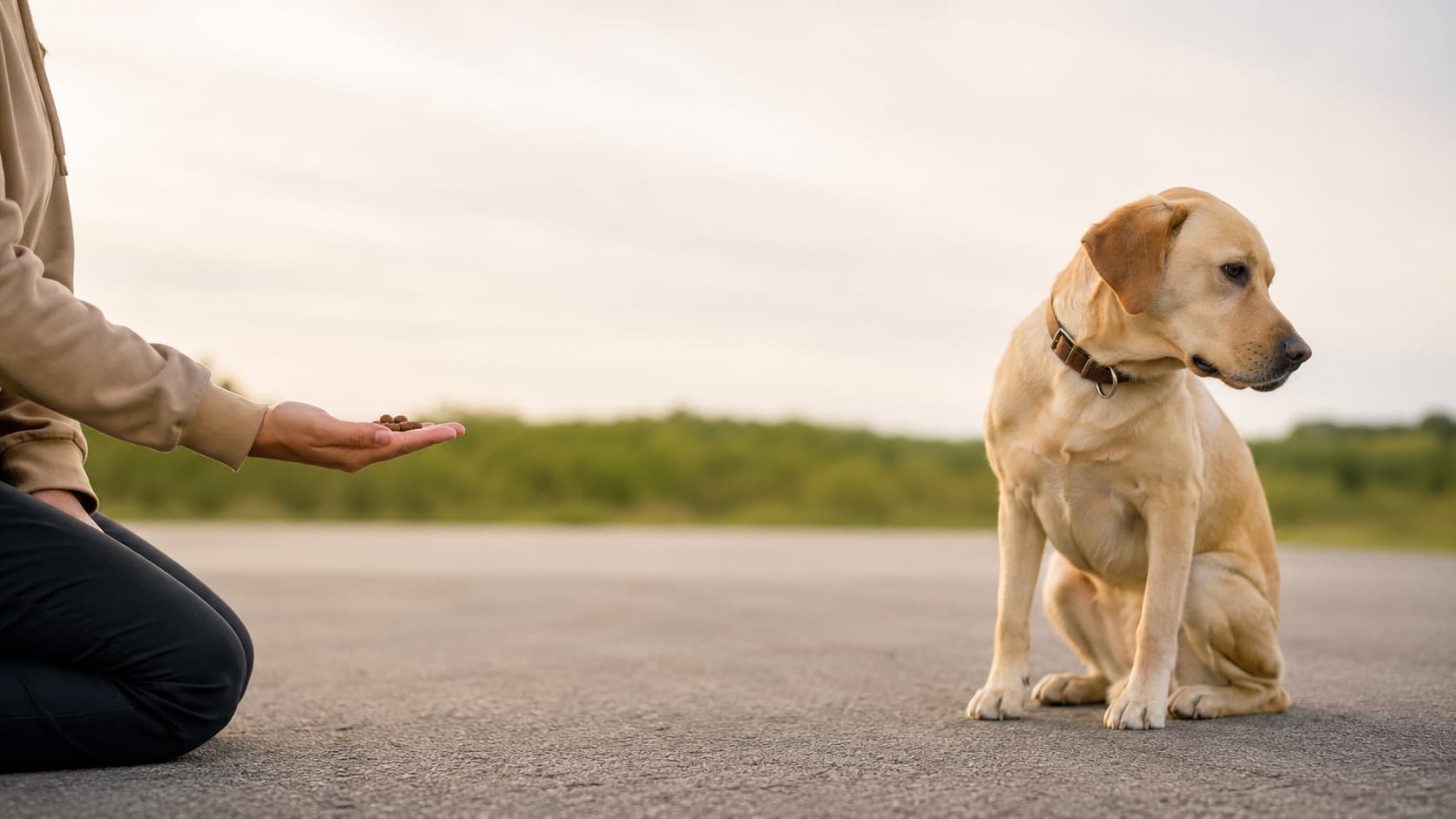
Help! My Dog Isn't Food Motivated
By Andrew · Trail & Heel
One of the most common things I hear from dog owners is: "My dog just isn't food motivated." Maybe, but probably not.
Before we decide that, I want to make sure the dog actually isn't food motivated.
A lot of dogs who "don't care about food" are eating a full bowl of food in the morning, getting random snacks during the day, and then being asked to work for treats in a distracting environment. That's not really a fair test.
First, ditch the bowl
If your dog isn't interested in food during training, the first thing I'd try is ditching the food bowl for a little while. That doesn't mean starving your dog. It means using their normal food as part of training instead of just putting it in a bowl and walking away.
For a couple of weeks, try hand feeding some or all of their meals. Ask for simple things: sit, eye contact, following you around the kitchen, coming when called, taking food gently, calm behavior at the door.
This is especially useful for dogs who are a little overweight or dogs who have a weird relationship with food because food has always just appeared for free. A hungry dog is a trainable dog. Again, I'm not saying to starve them. I'm saying don't put down a full bowl of food and then expect the dog to be excited about training food ten minutes later.
For some dogs, this change by itself is enough.
Try better food
Let's say you've tried that and your dog still doesn't seem very interested. The next step is to look at what you're offering, because not all food has the same value.
A dry biscuit might mean nothing to your dog outside. Kibble might work in the kitchen but fail completely at the park. Some dogs go crazy for tiny pieces of hot dog. Some like cheese. Some like banana. Some like Cheerios. Some like yogurt. Some like a tube of peanut butter.
And some dogs will look at all of that like you're insulting them. That's fine. Dogs are weird.
The point is to test different foods before deciding food "doesn't work." You may not have found the right food yet.
Just be careful with what you use. Peanut butter should not contain xylitol, which is toxic to dogs. Rich foods should be used in tiny amounts. And if your dog has stomach issues, allergies, pancreatitis risk, or a sensitive belly, don't go wild with new treats.
Small pieces. High value. Easy to eat. That's usually what I want.
Change how you deliver the food
Sometimes the food is not the problem. The delivery is. Some dogs don't love taking food directly from your hand, especially if they're nervous, overstimulated, or unsure of people.
Instead of handing the treat straight to the dog, toss it on the ground. Let them chase it. Hide it in the grass. Let them sniff it out. Turn the reward into a tiny search game.
For some dogs, the sniffing is almost more rewarding than the food itself.
This can also help nervous dogs because it takes social pressure off. The dog doesn't have to come right into your space and take food from your fingers. They can move, sniff, find the treat, and reset. That's still training.
If tossing food into the grass suddenly makes your dog interested, you don't have a dog who "isn't food motivated." You have a dog who needed the reward delivered differently.
If food really doesn't work
Some dogs really aren't that interested in food, even after you've tried the obvious things. Fine. Then we stop obsessing over food and start asking a better question: what does the dog actually want?
Training is not about forcing every dog to care about the same reward. It's about figuring out what the dog finds valuable and using that. For some dogs, that might be fetch, tug, chasing you, running around for a few seconds, praise, petting, a chest scratch, or a happy voice. For other dogs, it is more about real life stuff: sniffing, walking, going through a door, greeting someone, hopping in the car, or getting more freedom.
If your dog loves tug, ask for a sit, then start a short tug game. If your dog wants to sniff a tree, ask for a simple behavior first: sit, check in, walk with you for a few steps, whatever makes sense. Then release them to sniff. If your dog wants to keep walking, the walk itself can be the reward. When they're walking nicely, the walk continues. If they pull and hit the end of the leash, the walk stops or changes direction.
The main thing is that the dog can't already have the reward. If your dog is already dragging you to the smell, you can't reward them with the smell. They already took it. You need to pause, ask for something reasonable, then release the dog to the thing they wanted. Dog wants to sniff, you pause, the dog checks in, and you say, "Go sniff." Now the sniffing became the reward.
That's not punishment in some dramatic way. It's just clear information. Pulling doesn't make the good thing happen. Staying connected does. Just don't start this in the hardest possible environment. Work at home, in the yard, or somewhere calm first. Build the reward system, then slowly make the work harder.
One quick note
If your dog suddenly stops caring about food, especially if they normally love food, pay attention. That can be stress, but it can also be pain, nausea, dental issues, medication, or something medical. If the change is sudden or comes with other symptoms, call your vet.
The main idea
If your dog "isn't food motivated," don't stop there. Try meals for training, test better food, change how you deliver the reward, try play, try praise or petting, and use real life rewards like sniffing, walking, freedom, and access to things your dog wants.
There is usually something the dog finds valuable. Your job is to find it, control access to it, and use it to teach the dog what works.