
May 1, 2026 · 5 min read
What a Structured Training Walk Actually Looks Like
By Andrew · Trail & Heel
Most dogs walk their humans. The leash goes taut, the owner follows, and the dog picks the route, pace, and duration. It is movement — but it does not build much. A structured training walk is a different activity entirely.
What 'structured' actually means
Structured does not mean a tight heel position for 45 minutes with no sniffing allowed. It means the walk has a purpose: your dog is practicing real-world leash awareness, calm transitions, and attention to you. Sniffing, exploration, and freedom still happen — inside that structure, not instead of it.
The difference shows up in the small moments: what happens when the leash goes taut, how your dog responds to a bike passing at speed, whether they check in with you on a narrow section of trail, or whether they blow through a threshold without waiting. These are the moments structured walks work on.
How each Trail & Heel walk is built
Every outing follows the same general arc, adapted to the individual dog.
Before the walk: Loading into a vehicle, crossing a threshold, approaching a trailhead — these are the moments when most dogs are most dysregulated. We work them deliberately every time. The behavior you allow at the start sets the tone for everything that follows.
On the trail: Leash awareness is practiced consistently. What happens when pressure builds, when something interesting appears off to the side, when another dog or a jogger rounds a bend. Each distraction becomes a training moment, handled calmly rather than dragged past or shut down.
After the walk: Before going back inside, dogs settle. Moving from high arousal directly into the house reinforces the worst energy. A calm decompression finish is part of every session.
What you receive after each outing
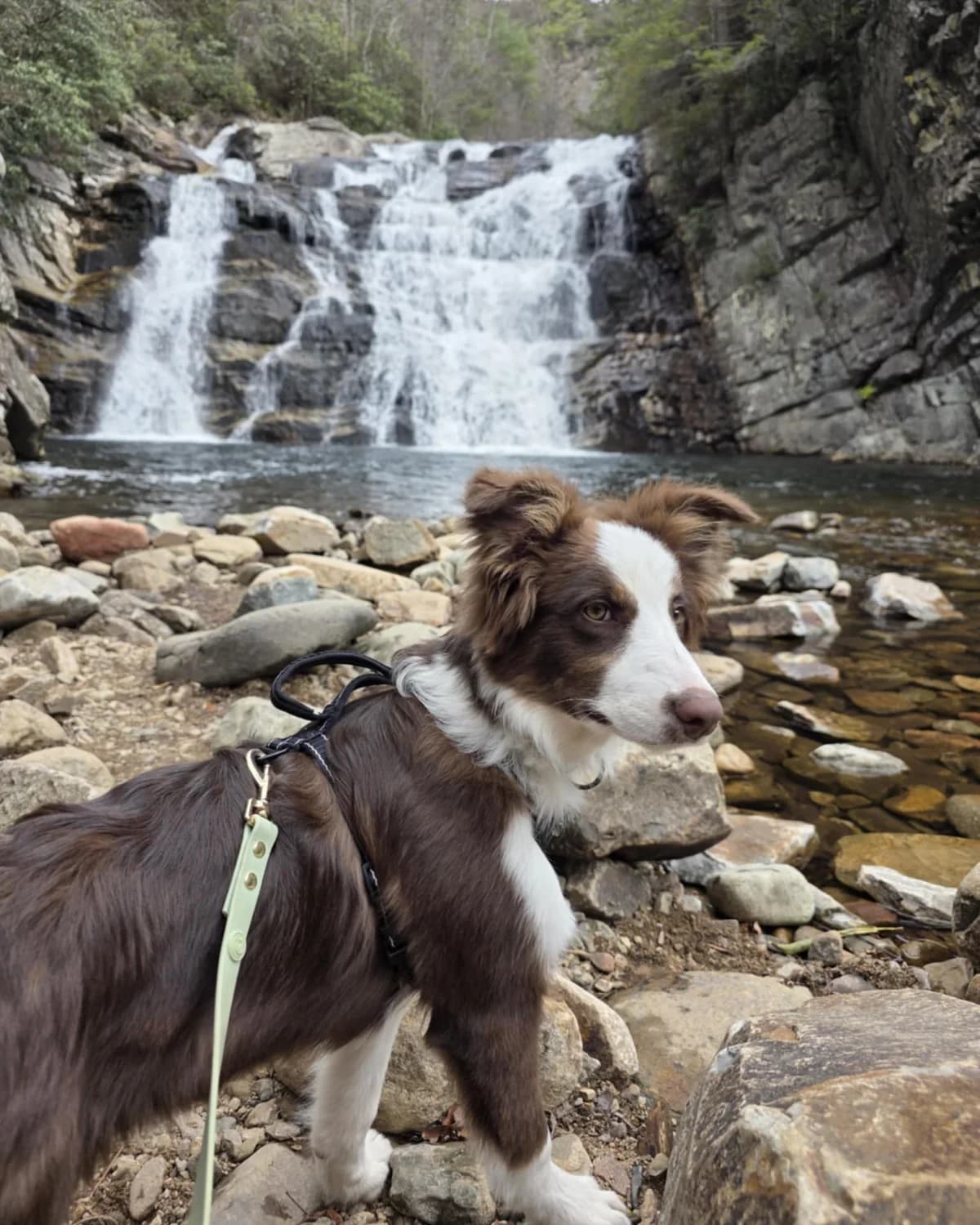
After every walk, you receive a short written update: what was practiced, how your dog responded, any patterns worth noting, and a photo or two from the trail. You are kept in the loop rather than handed back a tired dog with no context.
Who benefits most
Structured training walks work best for dogs that have energy without enough of a mental outlet — dogs who pull, lunge, or treat the leash like a loose suggestion. They also work well for owners who want their daily walk to double as useful training time, not just a way to tire the dog out.
- High-energy dogs who need structure alongside exercise
- Dogs who pull, lunge, or struggle with real-world distractions
- Reactive dogs working on calm, controlled exposure
- Owners who want consistent reinforcement between private training sessions
If that sounds like your dog, reach out and tell me about them. What life looks like now, and what you want to change.